



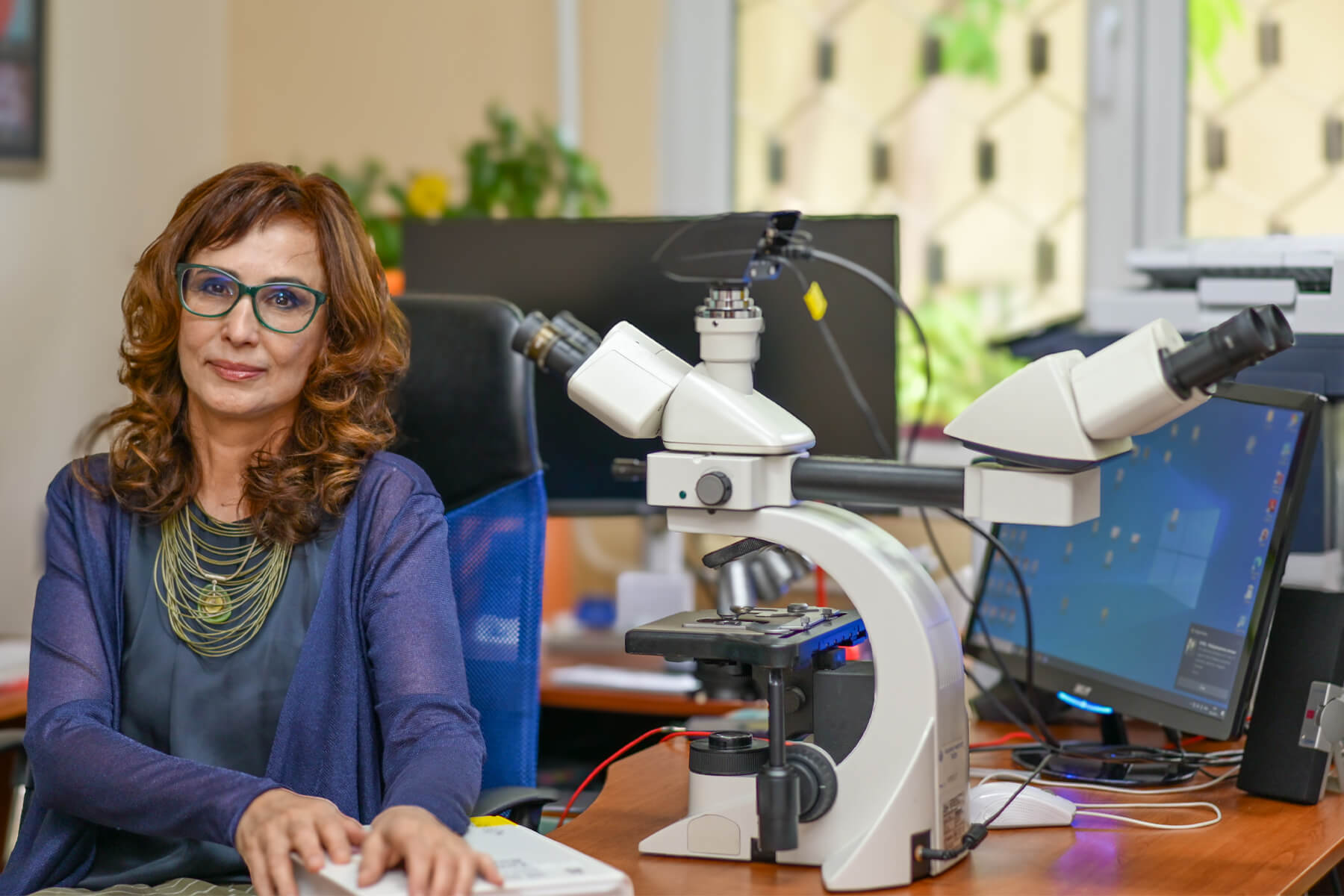
Bringing Precision Medicine Closer to Patients in Bulgaria
Interview with Prof. Savelina Popovska, Medical University – Pleven, Leonardo da Vinci Centre of Competence
Medical University – Pleven has recently received registration as an outpatient healthcare facility. Why is this an important milestone for the University, the Leonardo da Vinci Centre of Competence, and Bulgarian healthcare?
This registration marks an important transition from purely academic and research activity toward a fully integrated model in which education, science, and clinical service can directly support patients. For Medical University – Pleven, it creates a formal framework to deliver specialized outpatient healthcare based on the University’s scientific expertise and technological capacity.
For the Leonardo da Vinci Centre of Competence, this is a particularly significant step because it allows advanced biomedical research, molecular diagnostics, and precision medicine approaches to be translated more rapidly into real clinical practice. It shortens the distance between laboratory innovation and patient care.
At the national level, this milestone contributes to the modernization of Bulgarian healthcare. It creates new opportunities for patients to access high-level diagnostic services, including complex molecular and genomic analyses, within an academic medical environment. This is essential for building a more personalized, evidence-based, and future-oriented healthcare system in Bulgaria.
You have highlighted molecular diagnostics and genomic profiling as key priorities. How are these technologies changing the way cancer patients are diagnosed and treated today?
Molecular diagnostics and genomic profiling are fundamentally changing oncology. Traditionally, cancer treatment was guided mainly by tumor location, histology, and stage. Today, we increasingly understand cancer as a molecular disease, driven by specific genetic and genomic alterations that may differ significantly even between patients with the same histological diagnosis.
Genomic profiling allows us to identify clinically relevant mutations, gene fusions, copy number alterations, microsatellite instability, tumor mutational burden, and other biomarkers that can guide targeted therapy, immunotherapy, prognosis, and follow-up. This enables clinicians to move from a “one-size-fits-all” approach to a more precise therapeutic strategy.
For patients, this means more informed treatment decisions, better selection of targeted therapies, avoidance of ineffective treatments, and improved opportunities for participation in clinical trials. In many cancers, molecular testing is no longer an optional additional investigation — it is becoming an integral part of standard clinical decision-making.
Which patient groups do you expect will benefit most from the new precision medicine capabilities being developed at the Centre?
The greatest immediate benefit will be for patients with oncological diseases, especially those with tumors for which molecular biomarkers are already essential for treatment selection. This includes patients with lung cancer, breast and ovarian cancer, colorectal cancer, endometrial cancer, melanoma, gastrointestinal stromal tumors, and other solid tumors where targeted therapies and immunotherapies are increasingly biomarker-driven.
Patients with advanced, metastatic, recurrent, rare, or diagnostically challenging cancers may benefit particularly strongly, because comprehensive molecular profiling can reveal therapeutic options that would otherwise remain undetected.
Another important group includes patients with suspected hereditary cancer predisposition. Identifying germline pathogenic variants has implications not only for the patient’s treatment and surveillance but also for relatives, who may benefit from genetic counseling, risk assessment, prevention, and early detection strategies.
In the longer term, the Centre’s capabilities can also support pediatric patients, patients with rare diseases, and individuals with complex undiagnosed conditions, where genomic technologies can significantly shorten the diagnostic journey.
Beyond oncology, you have also mentioned hereditary and rare genetic diseases. Why is access to advanced genetic diagnostics becoming increasingly important for modern clinical practice?
Advanced genetic diagnostics are becoming indispensable because many diseases have a genetic basis, even when their clinical presentation is complex or non-specific. For patients with hereditary and rare genetic diseases, obtaining an accurate molecular diagnosis is often a turning point. It can end years of uncertainty, direct clinical management, inform prognosis, guide reproductive counseling, and allow family members to receive appropriate risk assessment.
In rare diseases, the diagnostic journey is often long and fragmented. Technologies such as next-generation sequencing, exome sequencing, targeted gene panels, and, in selected cases, long-read sequencing can dramatically improve diagnostic yield. They allow clinicians to identify disease-causing variants that would be difficult or impossible to detect using conventional methods.
Access to advanced genetic diagnostics is also important because modern medicine increasingly depends on precise disease classification. A correct molecular diagnosis can determine eligibility for specific therapies, clinical trials, surveillance programs, and preventive interventions. It also supports multidisciplinary care and helps healthcare systems use resources more effectively.
One of the missions of the Leonardo da Vinci Centre of Competence is to connect research, education, and healthcare delivery. How does this integrated model help accelerate innovation and improve patient outcomes?
The integration of research, education, and healthcare delivery is one of the strongest models for advancing precision medicine. When these three components work together, scientific discoveries are not isolated within laboratories, and clinical challenges do not remain disconnected from research capacity.
In such an environment, clinicians can identify real patient needs, researchers can develop and validate innovative diagnostic approaches, and students and young specialists can be trained directly in modern biomedical technologies. This creates a continuous cycle of knowledge generation, clinical translation, and professional development.
For patients, the benefit is practical and direct. They gain access to more advanced diagnostics, multidisciplinary expertise, and evidence-based decision-making. For the healthcare system, the benefit is strategic: it builds local capacity, reduces dependence on external services, and supports the development of national expertise in precision medicine.
This integrated model also helps prepare the next generation of medical professionals. Precision medicine requires not only technology, but also highly trained specialists who understand genetics, molecular pathology, bioinformatics, clinical interpretation, ethics, and communication with patients.
The Centre is investing in advanced infrastructure and technologies. What capabilities are now becoming available in Bulgaria that were difficult or impossible to access just a few years ago?
Bulgaria is now entering a stage where complex molecular and genomic technologies can be implemented much closer to the patient. Capabilities that were previously available mainly through referral abroad or through limited research collaborations are now becoming part of local academic and clinical infrastructure.
These include next-generation sequencing for oncology and hereditary diseases, comprehensive tumor genomic profiling, analysis of clinically actionable variants, molecular characterization of rare diseases, advanced bioinformatics interpretation, and the development of integrated diagnostic workflows. Such technologies allow us to generate clinically meaningful data in a shorter timeframe and within the Bulgarian healthcare and academic environment.
Equally important is the development of expert interpretation. Advanced technology alone is not sufficient. The value comes from combining high-quality laboratory methods with clinical genetics, pathology, oncology, bioinformatics, and genetic counseling. The Centre can provide precisely this multidisciplinary framework.
This represents a major opportunity for Bulgaria — not only to adopt existing international standards, but also to contribute to research, innovation, and the development of national models for precision diagnostics.
Looking ahead, where do you see the biggest opportunities for precision medicine in Bulgaria over the next five years, and what role can the Leonardo da Vinci Centre of Competence play in this transformation?
Over the next five years, the greatest opportunities for precision medicine in Bulgaria will be in three main directions: broader access to molecular diagnostics, integration of genomic data into routine clinical decision-making, and development of national expertise in personalized healthcare.
In oncology, precision medicine will become increasingly important for selecting targeted therapies, immunotherapies, and optimal treatment strategies. In hereditary and rare diseases, genomic diagnostics can improve early diagnosis, prevention, family counseling, and long-term patient management. In addition, the integration of molecular data with clinical, pathological, imaging, and digital health information will create new opportunities for research and improved patient stratification.
The Leonardo da Vinci Centre of Competence can play a central role in this transformation by serving as a bridge between science and clinical practice. It can support the implementation of advanced diagnostics, the training of specialists, the creation of multidisciplinary workflows, and the development of research projects with direct clinical relevance.
Most importantly, the Centre can help demonstrate that precision medicine is not a distant concept or a luxury technology. It is a necessary step toward more effective, more rational, and more patient-centered healthcare in Bulgaria.