


Pleven Team Presents Robotic Surgery and Telesurgery at International Congress in Rome
Key Takeaways
- A surgical team from Pleven presented at the 37th Congress on Digestive System Surgery, held in Rome on 12–13 November 2026.
- A robotic right hemicolectomy with D3 lymph node dissection was broadcast live from Pleven to the congress.
- The team also presented its experience with an intercontinental robotic operation between Shanghai and Pleven.
- The programme featured the work of Medical University – Pleven, the Clinic of Oncologic Surgery at UMHAT “Dr Georgi Stranski” and the Leonardo da Vinci Centre of Competence.
Two sessions on advanced surgery
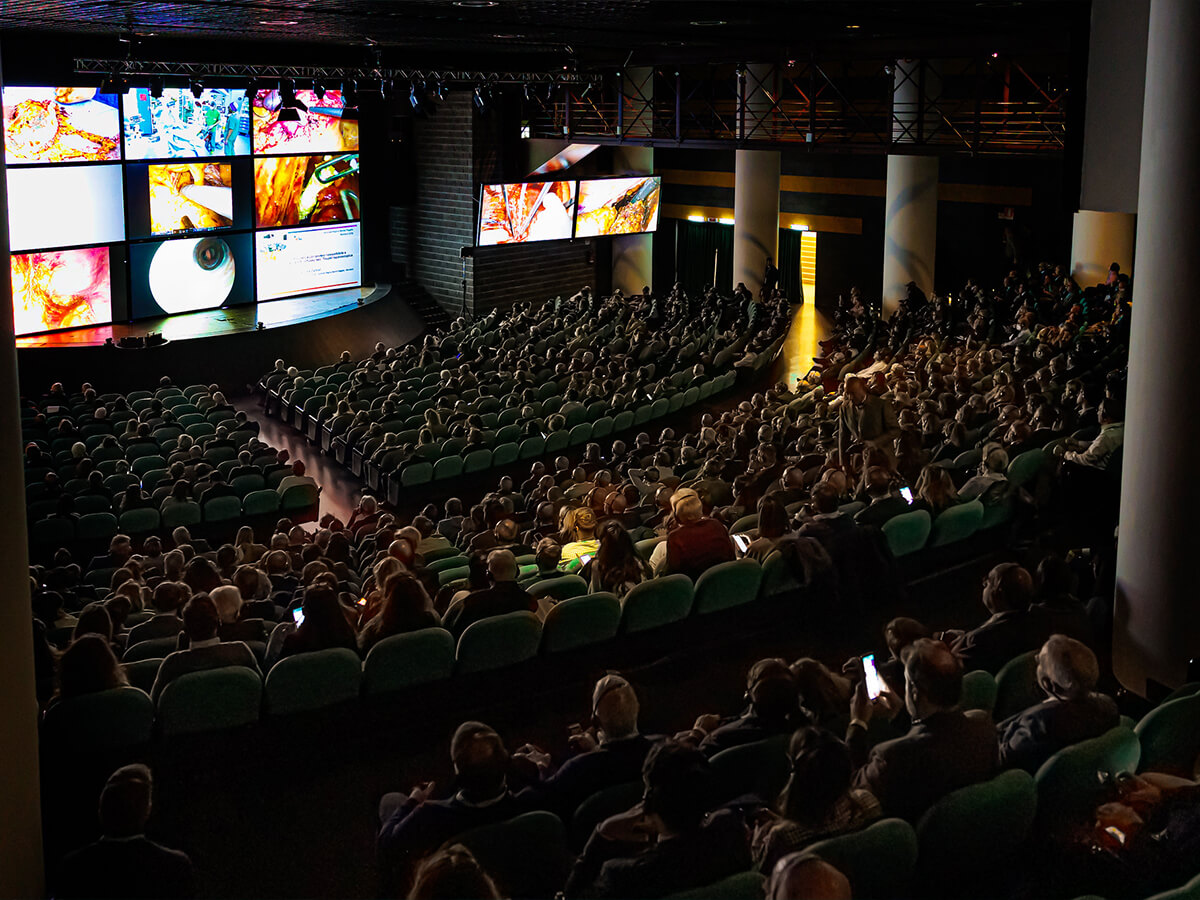
The 37th Congress on Digestive System Surgery brought surgeons and specialists from different countries to Rome. Chaired by Prof. Giorgio Palazzini, the forum featured more than 150 surgical demonstrations from five continents, alongside scientific presentations and discussions on innovations in minimally invasive and robotic surgery.
The Pleven team took part in two scientific sessions: a live robotic surgery demonstration and a presentation on intercontinental telesurgery. Together, they shared both clinical experience and practical considerations involved in remote robotic surgery.
A robotic operation broadcast live from Pleven
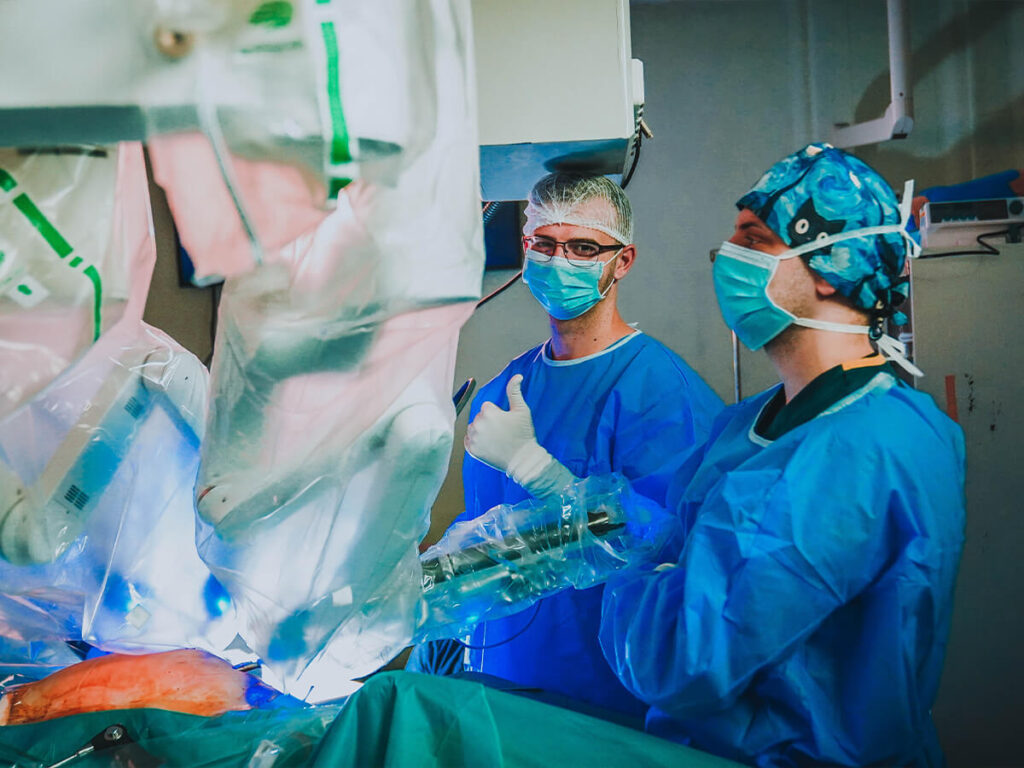
The live demonstration featured a robotic right hemicolectomy with D3 lymph node dissection and intracorporeal anastomosis. The procedure was transmitted in real time from the operating theatre of the Clinic of Oncologic Surgery at UMHAT “Dr Georgi Stranski” in Pleven to the congress audience in Rome.
The operation was performed by Prof. Dobromir Dimitrov, MD, PhD, Rector of Medical University – Pleven and Head of the Clinic of Oncologic Surgery, with the participation of Assoc. Prof. Martin Karamanliev, MD, PhD, Head of the Department of Surgical Diseases at the Faculty of Medicine.
The demonstration also included intraoperative fluorescence angiography using indocyanine green (ICG). This technique visualised the patient’s vascular anatomy and made the arterial structures visible to the audience, supporting the planning of the central vascular dissection.
The operation lasted 90 minutes and prompted an active scientific discussion and questions from participants. The demonstration showed how robotic technologies can support precise, minimally invasive surgery for malignant diseases of the colon.
From Shanghai to Pleven: the practical reality of telesurgery
The second session focused on intercontinental robotic telesurgery and the experience of carrying out a surgical intervention between China and Bulgaria.
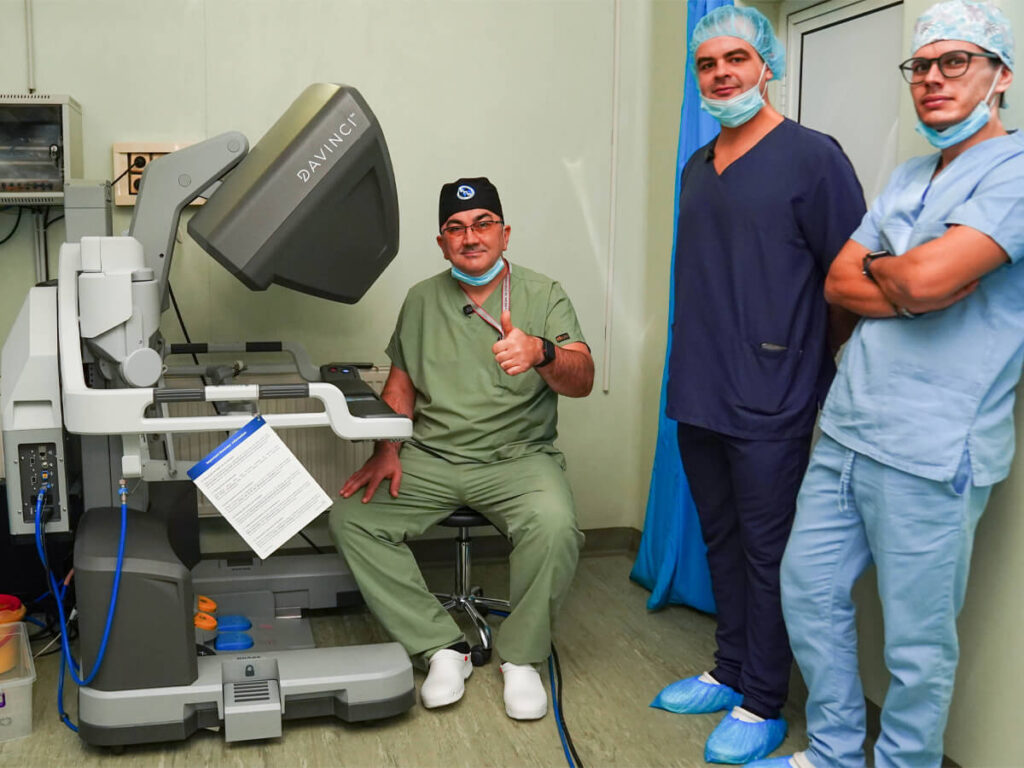
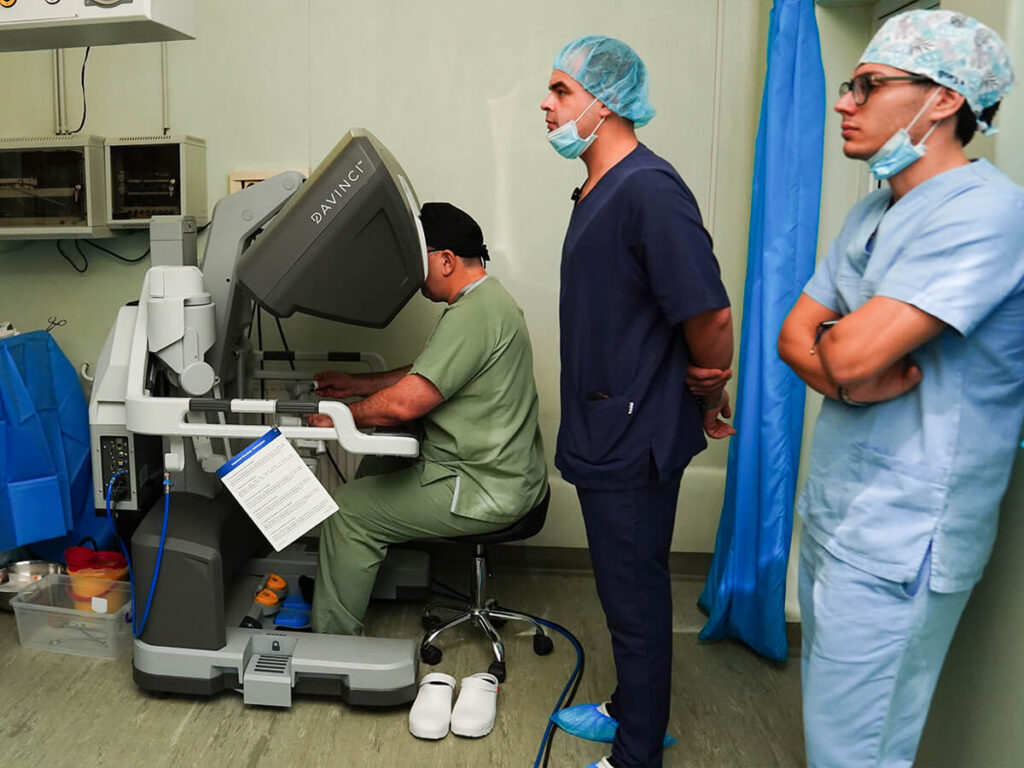
Assoc. Prof. Martin Karamanliev presented “From Console to Operating Table: The Reality of Telesurgery”. The presentation examined the operation performed on 20 October 2026, when Prof. Dobromir Dimitrov controlled the robotic system from Shanghai while the patient was in an operating theatre in Pleven, more than 8,000 kilometres away.
At the Pleven operating theatre, Assoc. Prof. Karamanliev and Assoc. Prof. Polina Marinova led the local surgical team. They monitored the patient and the procedure, with Assoc. Prof. Karamanliev prepared to take over the operation if necessary.
The presentation addressed the technological infrastructure, organisation of the surgical process, challenges of remote control and the central importance of patient safety. It also highlighted the close coordination required between the surgical teams at both locations.
Sharing experience and developing surgical research
The two sessions presented the practical experience and scientific potential of Medical University – Pleven, the Clinic of Oncologic Surgery and the Leonardo da Vinci Centre of Competence to an international medical audience.
“Modern surgery is entering a new stage of development, in which technology not only expands the possibilities of medicine but also overcomes geographical boundaries,” said Prof. Dobromir Dimitrov. He noted that the future of surgery will depend on combining technological innovation, professional expertise and international collaboration, while keeping responsibility towards the patient at its core.
By sharing experience in robotic surgery and telesurgery, the Pleven team contributed to international scientific exchange and to discussion of how high-technology surgery can continue to develop.
Q&A: Robotic Surgery and Telesurgery in Pleven
What procedure was demonstrated live at the congress?
A robotic right hemicolectomy with D3 lymph node dissection and intracorporeal anastomosis was broadcast from the Clinic of Oncologic Surgery in Pleven to the congress in Rome.
What was the purpose of the ICG fluorescence angiography?
The technique visualised the patient’s vascular anatomy during the operation. It showed the arterial structures and supported planning of the central vascular dissection.
Was the Shanghai–Pleven telesurgery operation performed during the congress?
No. The intercontinental operation took place on 20 October 2026. At the congress, the team presented the experience and discussed the technology, organisation, coordination and patient-safety considerations involved.
Who was part of the local team in Pleven during that operation?
Assoc. Prof. Martin Karamanliev and Assoc. Prof. Polina Marinova led the surgical team at the Pleven operating theatre. They monitored the patient and procedure, with Assoc. Prof. Karamanliev ready to take over if necessary.
What did the telesurgery presentation examine?
It covered the technological infrastructure and surgical workflow, the challenges of controlling a robotic system over a long distance, coordination between the teams and the importance of patient safety.