


From Shanghai to Pleven: Robotic Surgery Across More Than 8,000 Kilometres
Key Takeaways
- On 20 October 2026, Prof. Dobromir Dimitrov operated on a patient in Pleven while controlling a surgical robot from Shanghai, China, more than 8,000 kilometres away.
- The patient underwent minimally invasive robotic surgery for a left inguinal hernia. A surgical and anaesthesia team remained beside the patient throughout the procedure.
- A technical interruption before the operation delayed the start of remote control by approximately 45 minutes. After engineers adjusted the system, the remote surgical stages took approximately one hour.
- The operation was completed successfully, and the patient was awake, responsive and in good immediate postoperative condition.
- The experience marks the beginning of a practical research project, fully supported by the Leonardo da Vinci Center of Competence, to advance telesurgery through clinical and technical collaboration.
One Operation, Two Locations
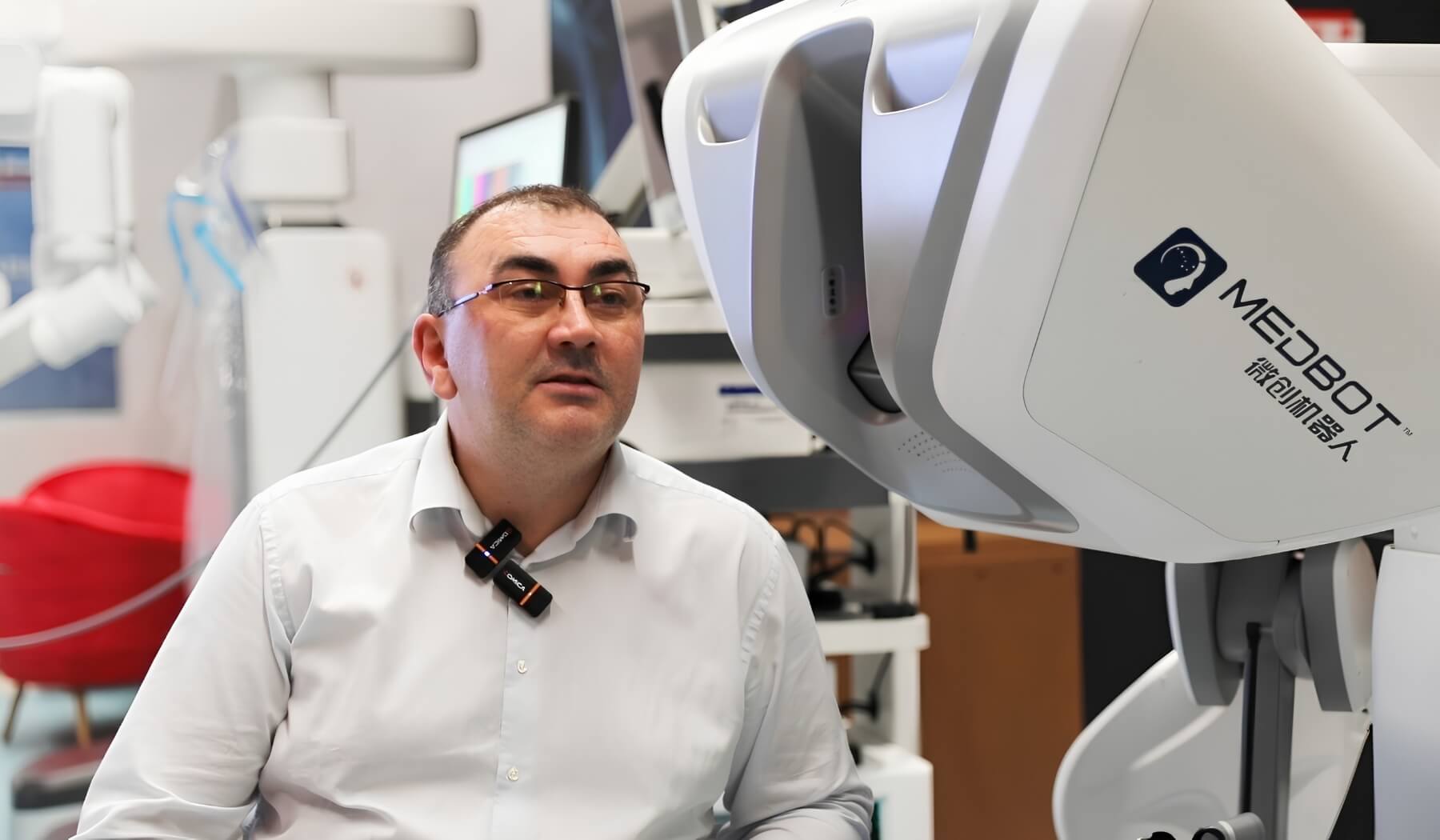
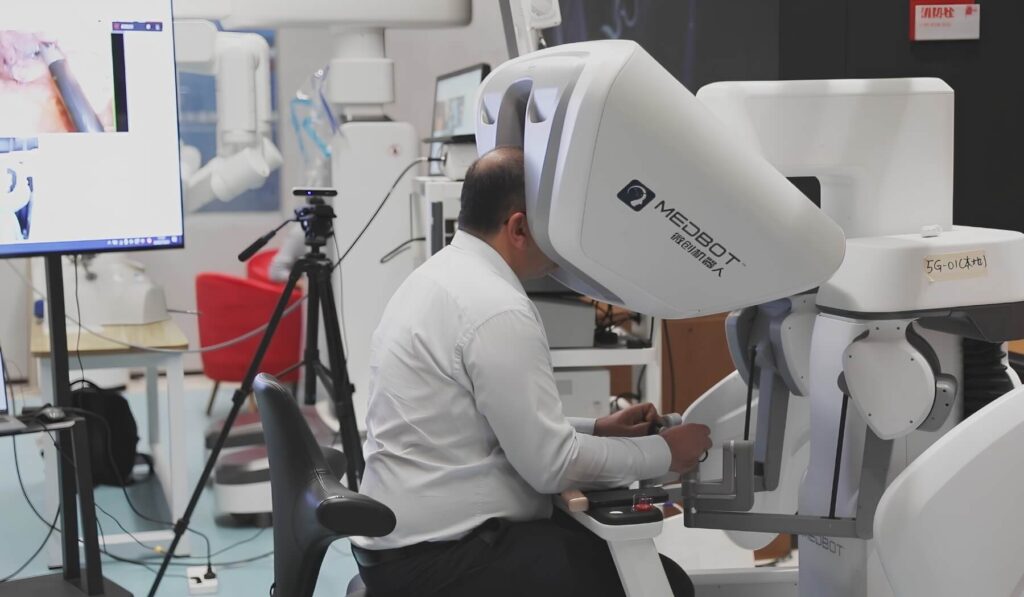
On 20 October 2026, the operating room in Pleven and a surgical console in Shanghai became part of the same procedure. Prof. Dobromir Dimitrov, Rector of Medical University – Pleven, controlled the instruments of a Toumai Robotic Surgical System from China while the patient and the clinical team were in Bulgaria.
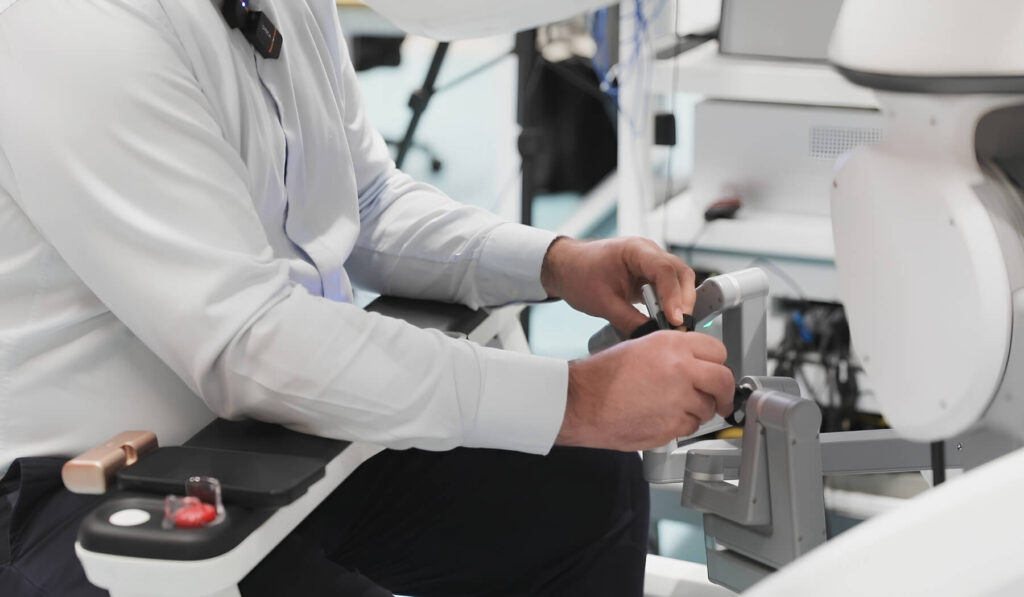
The patient was treated for a left inguinal hernia using a minimally invasive robotic approach known as TAPP, or transabdominal preperitoneal repair. From Shanghai, Prof. Dimitrov performed the main surgical stages, including dissection, placement of the surgical mesh and suturing of the peritoneum.
This was telesurgery: the surgeon at a distant console directly controlled the robotic instruments. It differs from tele-mentoring, in which a remote specialist guides a surgeon who operates beside the patient.
The Team Beside the Patient
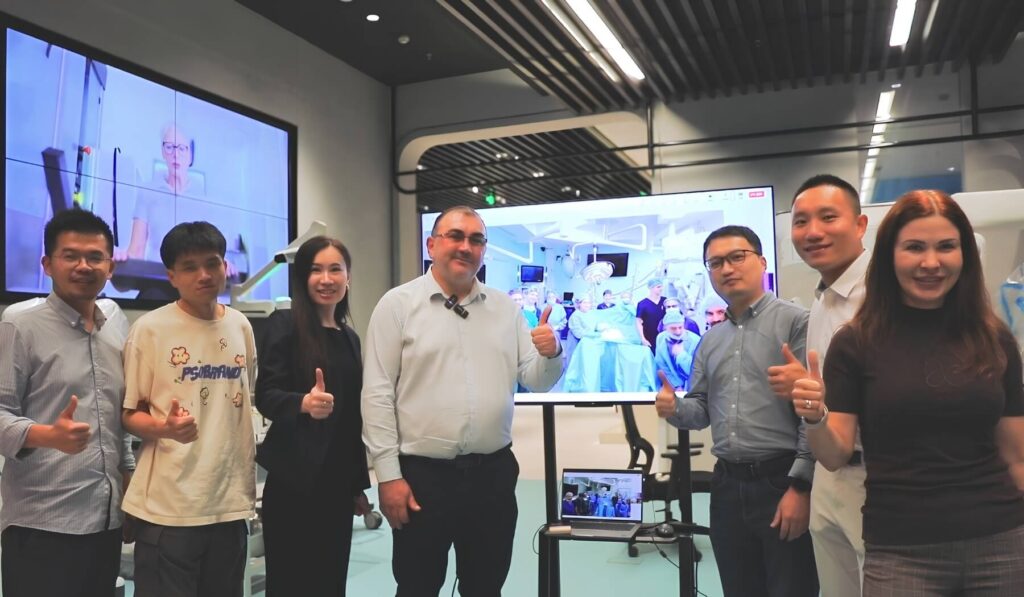
Distance did not remove the need for a fully prepared team in the operating room. Assoc. Prof. Martin Karamanliev and Assoc. Prof. Polina Marinova were the surgeons at the patient’s side, ready to take over if necessary. The team also included anaesthesiologist Dr. Slavina Yohanova, operating room nurses Violeta Dinova and Zhaklin Mihaylova, and anaesthesia nurse Yuliana Vatkova.
Dr. Stefka Petrova was with Prof. Dimitrov in Shanghai. She was undertaking training on the Toumai system and helped coordinate communication between the remote surgeon and the team in Pleven during the procedure.
Preparation, Interruption and Recovery
The operation followed four days of technical testing. Clinical and engineering teams checked the connection between Shanghai and Pleven, the transmission of surgical video, the response of the instruments to remote commands and the arrangements for immediate takeover by the surgeon in the operating room.
Immediately before surgery began, repeated interruptions in instrument control led the teams to pause the remote preparation. For approximately 45 minutes, engineers adjusted connection parameters and software settings. They changed the threshold at which increased latency would automatically interrupt control and activated a different configuration of the surgical console.
Once stable control was restored, Prof. Dimitrov completed the remote surgical stages in approximately one hour, using slower, controlled movements. The recorded connection latency during the procedure was approximately 160–180 milliseconds.
The operation was completed successfully. Following anaesthesia, the patient was awake and responsive and was reported to be in good immediate postoperative condition. That assessment describes the period immediately after surgery; longer-term recovery requires follow-up.
A Shared Clinical and Research Effort
The operation brought together Medical University – Pleven, the EU co-funded Leonardo da Vinci Center of Competence and the Clinic of Oncological Surgery at University Hospital “Dr. Georgi Stranski”, working with international technology and engineering teams. The Center contributed its experience in robotic systems and advanced medical technologies, while the clinic provided surgical expertise and the team caring for the patient.
For Prof. Dimitrov, the procedure also fulfilled a childhood ambition to control a robot from a distance. Speaking after the operation, he emphasised that the patient’s condition mattered most and credited the surgeons, anaesthesia staff, nurses, engineers and technical specialists in Bulgaria and China for the result.
The team also thanked colleagues from University Hospital “Sveta Marina” – Pleven and University Hospital “Medica” – Ruse for their methodological and organisational support.
What Comes Next for Telesurgery?
This operation marks the start of a research project with a practical focus. The team will use the clinical and technical experience gained, including its response to the interruption before surgery, to inform further work on telesurgery and contribute to its development internationally.
Remote surgery could allow highly specialised surgeons to take part directly in selected procedures without travelling to the patient’s hospital. Wider clinical use, however, depends on reliable communication, thoroughly tested technology, clear safety procedures and a qualified team beside the patient. The Shanghai–Pleven operation offers a concrete case from which to study all of these requirements.
Q&A: The Shanghai–Pleven Telesurgery Operation
What happened on 20 October 2026?
Prof. Dobromir Dimitrov controlled a surgical robot from Shanghai to operate on a patient in Pleven, more than 8,000 kilometres away. The patient underwent minimally invasive repair of a left inguinal hernia.
Was there a surgeon with the patient?
Yes. Two surgeons and a full operating room and anaesthesia team were present in Pleven. The surgeons at the patient’s side were prepared to take over if necessary.
Did the robot operate independently?
No. Prof. Dimitrov directed the robotic instruments from a surgical console. The robot translated his commands into movements in the operating room.
What happened when the connection caused difficulties?
Before surgery began, the teams paused remote preparation because instrument control was repeatedly interrupted. Engineers spent approximately 45 minutes adjusting the system. The remote operation proceeded after stable control was restored.
How was the patient immediately after the operation?
The operation was completed successfully. The patient was awake and responsive after anaesthesia and was reported to be in good immediate postoperative condition.
What is the role of the Leonardo da Vinci Center of Competence?
The EU co-funded Center contributed its experience in robotic systems and advanced medical technologies. The operation also begins a practical research project intended to support the further development of telesurgery.